
Sri Dalada Maligawa (Temple of the Sacred Tooth Relic)
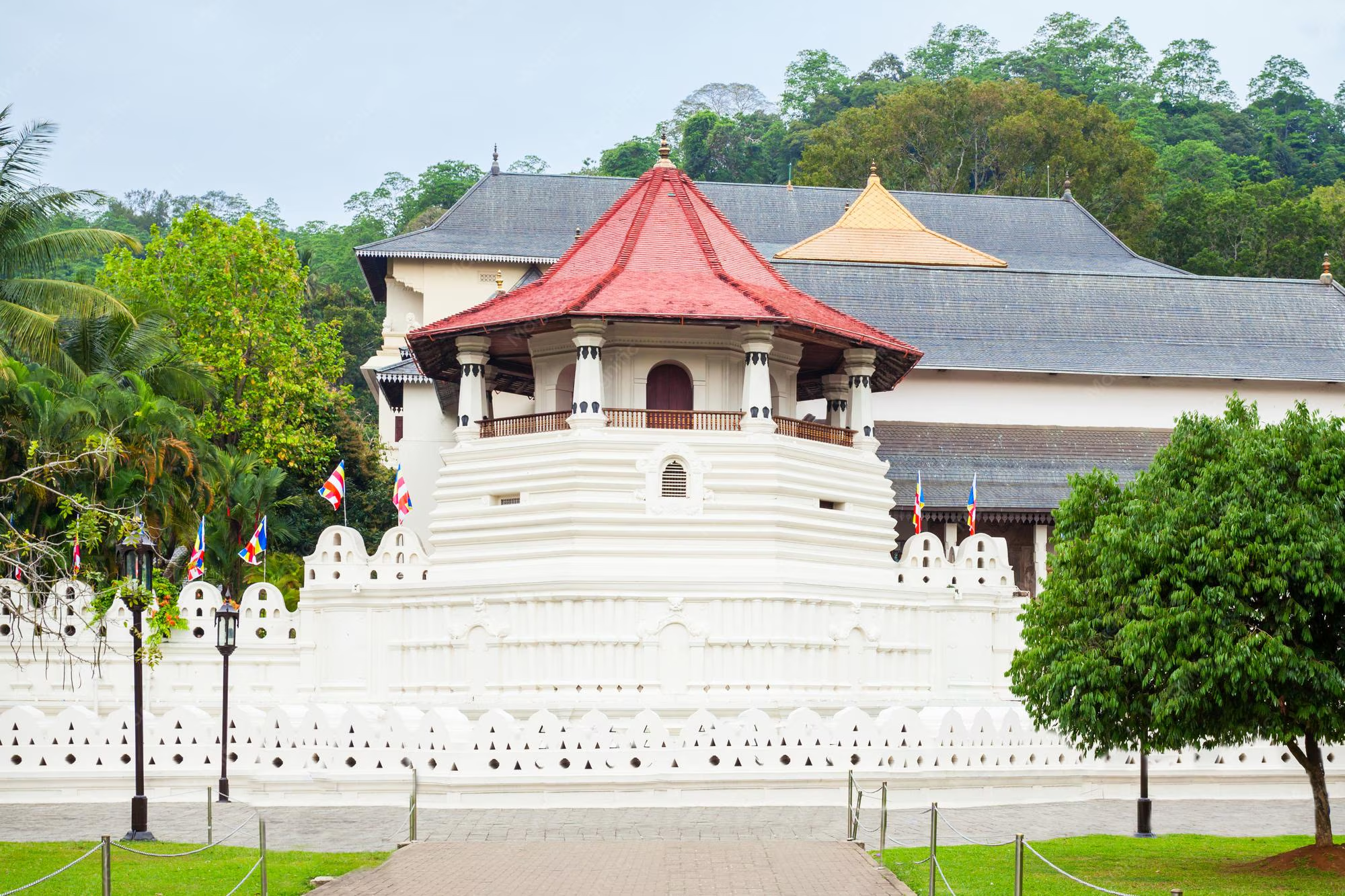
The Sri Dalada Maligawa, widely known as the Temple of the Sacred Tooth Relic, is the most revered Buddhist shrine in Sri Lanka and a cornerstone of the country's cultural identity. Located in the royal palace complex of the historic capital of Kandy, this UNESCO World Heritage site draws millions of pilgrims and travelers from around the globe. The temple owes its profound significance to the sacred left canine tooth of Gautama Buddha, a relic that is not only considered a priceless religious treasure but also a historical symbol of supreme sovereign power.According to historical chronicles, the sacred relic was retrieved from the Buddha's funeral pyre in India in 543 BC. It was smuggled into Sri Lanka during the 4th century AD by Prince Danta and Princess Hemamala, who hid the tooth in the princess’s hair to protect it from warring factions. Over the centuries, a powerful tradition emerged: whoever held custody of the relic possessed the divine right to rule the island. Consequently, as the capital of Sri Lanka shifted through ancient kingdoms, successive monarchs built grand, heavily fortified temples to safeguard the tooth, culminating in the construction of the present-day complex in Kandy by the last independent kings.Architecturally, the temple complex is a brilliant showcase of classical Kandyan craftsmanship, characterized by intricate woodwork, polished granite, and vibrant ceiling frescoes. The main two-story shrine building features a gilded gold roof added by modern benefactors, which glistens against the backdrop of the Kandy hills. Surrounding the temple is a low, white stone wall pierced with decorative holes meant to hold small oil lamps during festivals. The wall features a wave-like pattern designed to mirror the rippling waters of the adjacent Kandy Lake, seamlessly blending the architecture with the natural landscape.The sacred relic itself is housed within the Vedahitina Maligaya, a highly secure inner chamber on the upper floor of the main shrine. Although the physical tooth is safely kept away from public sight inside a series of seven interlocking, stupa-shaped golden caskets encrusted with precious gemstones, the room acts as the spiritual focal point of the temple. Daily, the air fills with the fragrance of jasmine flowers and burning incense as high-ranking monks perform elaborate rituals and chants. Thrice daily—at dawn, midday, and dusk—traditional drummers in traditional dress play high-energy rhythms during the puja (prayer) services, drawing crowds of devotees clad in immaculate white attire.The global cultural prominence of the Sri Dalada Maligawa reaches its absolute peak during the Esala Perahera, a magnificent 10-day festival held annually in July or August. During this grand pageant, a special replica casket is placed atop a majestic, brightly illuminated elephant and paraded through the streets of Kandy. The procession is an unforgettable spectacle, featuring hundreds of traditional Kandyan dancers, fire-twirlers, whip-crackers, and beautifully caparisoned elephants. This vibrant festival not only serves to invoke blessings for rain and prosperous harvests but also ensures that the ancient heritage, spirituality, and royal traditions of Kandy remain intensely alive today.
Peradeniya Botanical Gardens
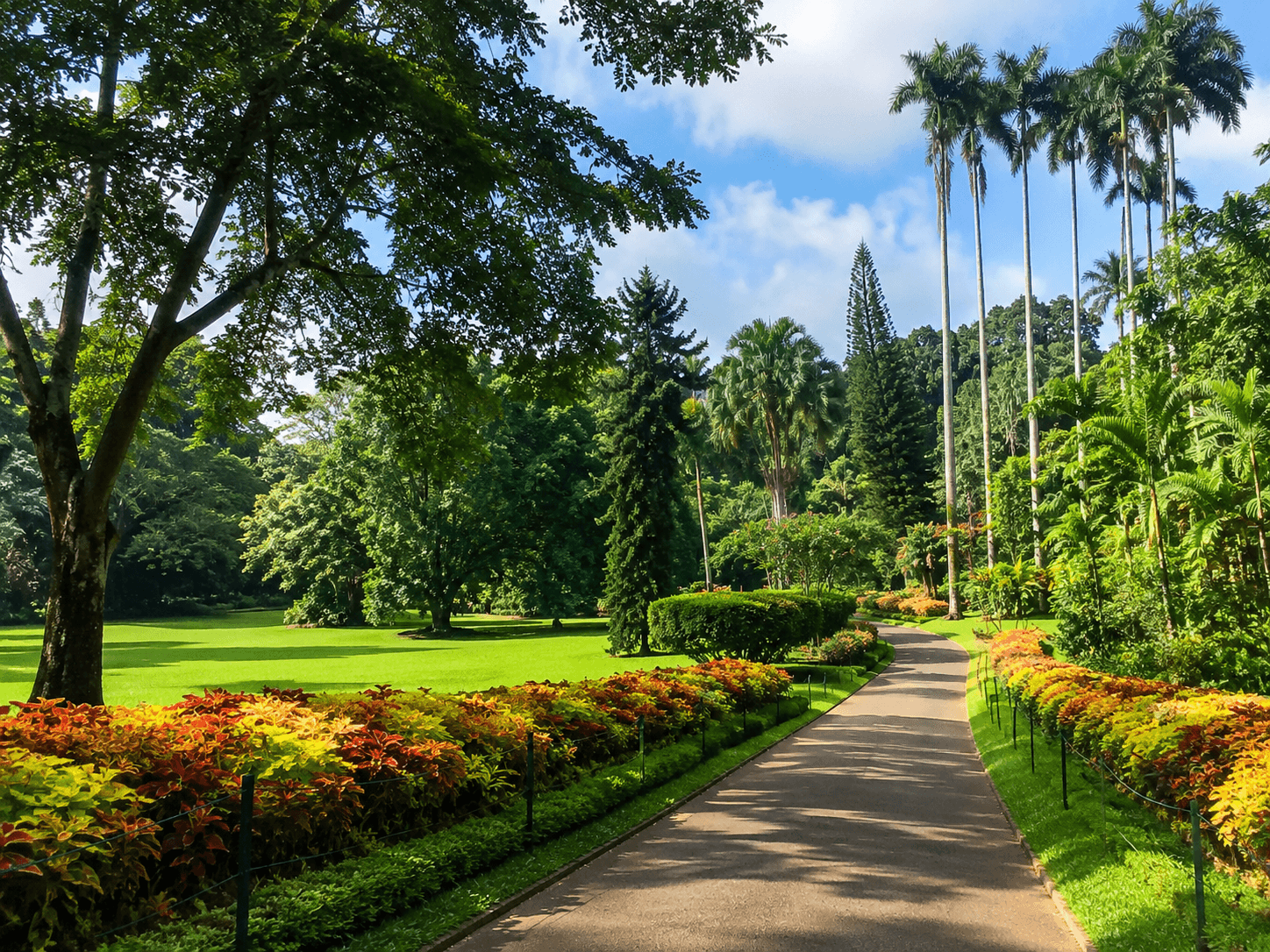
The Royal Botanical Gardens, Peradeniya, situated just a few kilometers outside the city center of Kandy, is the largest and most renowned botanical garden in Sri Lanka. Spanning an expansive 147 acres along the banks of the Mahaweli River, this lush sanctuary is celebrated worldwide for its unparalleled collection of tropical and subtropical flora. A designated haven of biodiversity, it attracts nearly two million visitors annually, offering a peaceful, green escape that seamlessly blends rich history, world-class horticulture, and breathtaking natural scenery.The origins of the gardens date back to 1371, when King Wickramabahu III ascended the throne and established a royal court at Peradeniya near the Mahaweli River. Successive Kandyan kings utilized the scenic grounds as a private pleasure garden and royal residence. Following the fall of the Kandyan Kingdom to the British, the site was officially converted into a formal botanical garden in 1821 under the supervision of Alexander Moon. It was initially used to cultivate economic crops like coffee, cinnamon, and nutmeg, eventually evolving over two centuries into a world-class scientific institution dedicated to the preservation of rare plant species
Architecturally arranged into thematic zones, the garden is home to more than 4,000 distinct species of plants, including a world-famous collection of orchids, spices, medicinal plants, and towering palms. Among its most iconic highlights is the spectacular Orchid House, which showcases hundreds of vibrant, exotic orchid varieties, including rare native species. Visitors are also drawn to the breathtaking Avenue of Royal Palms, the monumental Giant Javan Fig Tree (Ficus benjamina) whose sprawling canopy extends over a massive grassy lawn, and a unique collection of "double coconuts" (Coco de Mer) native to the Seychelles, which bear the largest and heaviest seeds in the plant kingdom.Beyond its striking visual beauty, the Peradeniya Botanical Gardens serves as a vital center for scientific research and conservation in South Asia. Operated by the Department of National Botanical Gardens, it houses the National Herbarium of Sri Lanka, which protects over 150,000 plant specimens for global botanical study. The gardens are deeply committed to ex-situ conservation, propagating endangered flora and researching plant pathology to protect the island's unique ecosystems. For travelers, the wide, paved avenues provide a serene backdrop for casual strolls, birdwatching, and photography, where one can spot troops of endemic toque macaques and hundreds of flying foxes roosting in the canopy.For an optimal experience, the best time to explore the grounds is during the early morning hours when the air is cool and the light is soft. The gardens are fully open to the public daily from 7:30 AM to 5:00 PM, and foreign adult entry tickets are priced at approximately LKR 3,000. Given the massive scale of the estate, visitors should plan to spend at least two to three hours wandering the loops, ensuring they bring comfortable walking shoes, plenty of water, and an umbrella to shield against sudden tropical rain showers or midday sun.